Paradox of Progress
February 23, 2026
The Research
This research investigates the relationship between technology and its evolving impact on human nature. Drawing inspiration from both artists and engineers, the study examines how technological advancement influences the ways individuals connect, process information, and sustain attention. A central challenge within the research was translating diverse theoretical sources into a cohesive visual design language. Through synthesis and analysis, three core themes emerged: connection, speed, and attention. These concepts became the foundation for the project’s visual and conceptual framework.
The research process extended beyond written analysis into experimental design exploration. Beginning with typographic experimentation and progressing into print-based applications, a series of projects were developed to interrogate these themes. These included children’s book prototypes, poster designs, and the creation of a custom typeface. Each iteration functioned as both research and artifact, testing how visual form could embody abstract technological concepts. Concurrently, the written component of the study was developed, culminating in a fully realized publication.
What distinguishes this project from traditional research outcomes is the integration of findings, visual explorations, references, and written analysis into a comprehensive 120-page book. The publication addresses the three primary themes—connection, speed, and attention—while being presented in both Spanish and English within a single volume. This bilingual approach not only expands accessibility but also reduces production costs compared to printing separate editions.
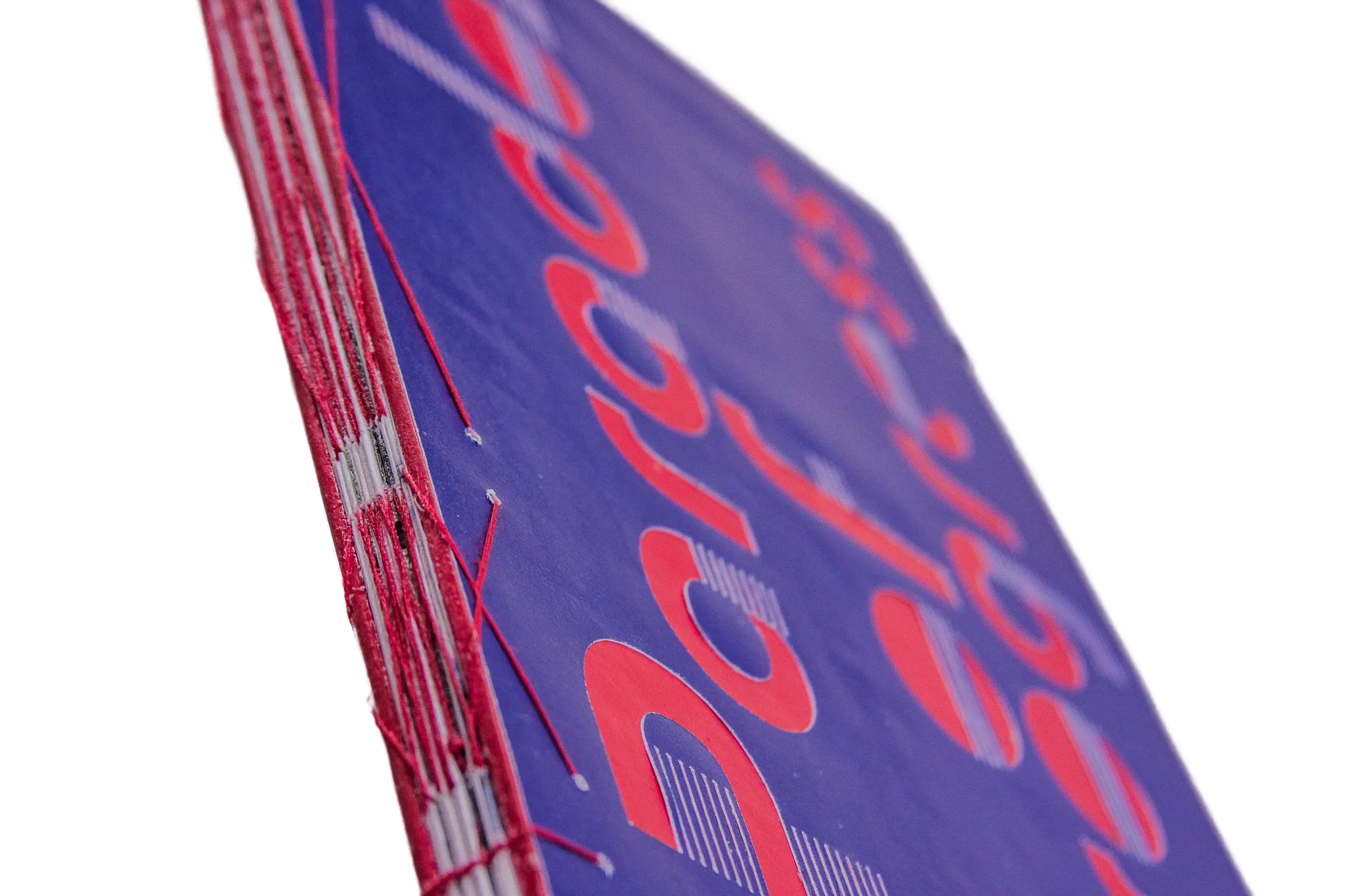
Material and structural decisions reinforce the conceptual framework. The book is bound using an exposed French stitch binding, making the act of connection both literal and metaphorical. Typography, texture, and pattern are strategically employed throughout the layout to evoke a sense of motion, reflecting the theme of speed and influencing the pacing of the reader’s experience. The die-cut cover, paired with dynamic graphic elements, engages the theme of attention by creating a visually and physically compelling entry point into the text.
Collectively, the book and its accompanying exploratory projects embody the research themes in both content and form. By integrating theory, experimentation, and production into a unified outcome, the project presents a distinctive and interdisciplinary approach to examining technology’s influence on contemporary human experience.
Nied Designs


Paradox of Progress
February 23, 2026
The Research
This research investigates the relationship between technology and its evolving impact on human nature. Drawing inspiration from both artists and engineers, the study examines how technological advancement influences the ways individuals connect, process information, and sustain attention. A central challenge within the research was translating diverse theoretical sources into a cohesive visual design language. Through synthesis and analysis, three core themes emerged: connection, speed, and attention. These concepts became the foundation for the project’s visual and conceptual framework.
The research process extended beyond written analysis into experimental design exploration. Beginning with typographic experimentation and progressing into print-based applications, a series of projects were developed to interrogate these themes. These included children’s book prototypes, poster designs, and the creation of a custom typeface. Each iteration functioned as both research and artifact, testing how visual form could embody abstract technological concepts. Concurrently, the written component of the study was developed, culminating in a fully realized publication.
What distinguishes this project from traditional research outcomes is the integration of findings, visual explorations, references, and written analysis into a comprehensive 120-page book. The publication addresses the three primary themes—connection, speed, and attention—while being presented in both Spanish and English within a single volume. This bilingual approach not only expands accessibility but also reduces production costs compared to printing separate editions.
Material and structural decisions reinforce the conceptual framework. The book is bound using an exposed French stitch binding, making the act of connection both literal and metaphorical. Typography, texture, and pattern are strategically employed throughout the layout to evoke a sense of motion, reflecting the theme of speed and influencing the pacing of the reader’s experience. The die-cut cover, paired with dynamic graphic elements, engages the theme of attention by creating a visually and physically compelling entry point into the text.
Collectively, the book and its accompanying exploratory projects embody the research themes in both content and form. By integrating theory, experimentation, and production into a unified outcome, the project presents a distinctive and interdisciplinary approach to examining technology’s influence on contemporary human experience.
Nied Designs

Paradox of Progress
February 23, 2026
The Research
This research investigates the relationship between technology and its evolving impact on human nature. Drawing inspiration from both artists and engineers, the study examines how technological advancement influences the ways individuals connect, process information, and sustain attention. A central challenge within the research was translating diverse theoretical sources into a cohesive visual design language. Through synthesis and analysis, three core themes emerged: connection, speed, and attention. These concepts became the foundation for the project’s visual and conceptual framework.
The research process extended beyond written analysis into experimental design exploration. Beginning with typographic experimentation and progressing into print-based applications, a series of projects were developed to interrogate these themes. These included children’s book prototypes, poster designs, and the creation of a custom typeface. Each iteration functioned as both research and artifact, testing how visual form could embody abstract technological concepts. Concurrently, the written component of the study was developed, culminating in a fully realized publication.
What distinguishes this project from traditional research outcomes is the integration of findings, visual explorations, references, and written analysis into a comprehensive 120-page book. The publication addresses the three primary themes—connection, speed, and attention—while being presented in both Spanish and English within a single volume. This bilingual approach not only expands accessibility but also reduces production costs compared to printing separate editions.
Material and structural decisions reinforce the conceptual framework. The book is bound using an exposed French stitch binding, making the act of connection both literal and metaphorical. Typography, texture, and pattern are strategically employed throughout the layout to evoke a sense of motion, reflecting the theme of speed and influencing the pacing of the reader’s experience. The die-cut cover, paired with dynamic graphic elements, engages the theme of attention by creating a visually and physically compelling entry point into the text.
Collectively, the book and its accompanying exploratory projects embody the research themes in both content and form. By integrating theory, experimentation, and production into a unified outcome, the project presents a distinctive and interdisciplinary approach to examining technology’s influence on contemporary human experience.
Nied Designs